
Buying an RV? What You Should Know About Professional RV Detailing Before Your First Trip
Buying an RV is exciting. You start picturing open highways, family trips, and quiet campgrounds. Before loading the refrigerator and pulling out of the driveway, though, take a close look at the RV itself.
Professional detailing is not only about making a purchase shine. It can expose neglected areas, remove storage buildup, protect vulnerable surfaces, and create a clean maintenance baseline. Buying an RV? What you should know about professional RV detailing before your first trip is simple: work completed before mile one can prevent frustration later.
Buying an RV? What You Should Know About Professional RV Detailing Before Your First Trip
A new-to-you RV may look clean while still carrying road film, oxidation, mildew, water spots, or grime around seals. Even brand-new units can arrive with transport dust or rushed dealership cleanup.
A proper first detail creates a baseline. Once the RV is clean, it becomes easier to notice future leaks, fading, staining, or damage.
At Speedy K’s, that attention comes from decades of hands-on work rather than grabbing a general cleaner from a store shelf. Kevin began working around boats as a teenager near Lake Erie, then studied coatings, gel coats, paint systems, fiberglass construction, and manufacturer recommendations. That careful approach matters with RVs because one process does not fit every surface.

What does RV mean?
RV means recreational vehicle. The term includes motorhomes and towable units such as travel trailers, fifth wheels, folding campers, and truck campers. The RV Industry Association describes them as temporary living quarters designed for recreational, camping, or seasonal use.
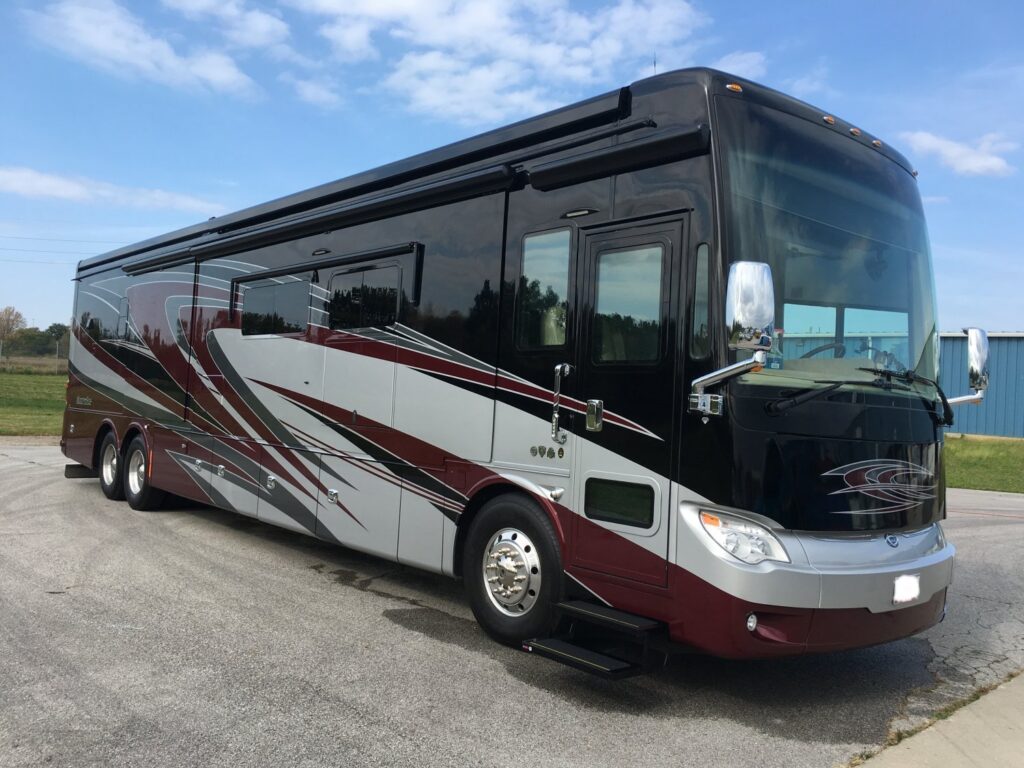
That definition matters because “RV” covers very different designs. A Class A may have large painted panels, while a lightweight trailer may use thinner finishes, decals, aluminum, and fiberglass.
Before scheduling Detailing Services for RVs, provide the year, make, model, length, finish type, and current condition. These details help the professional select safer products and realistic service options.
Why professional detailing matters before the first trip
Your first trip will add bugs, dust, tree sap, and road grime. Starting with an unprotected surface lets those contaminants settle onto an already compromised finish.
A professional detail may also reveal issues missed during an emotional purchase. Dark streaks can show runoff patterns. Heavy oxidation may indicate long outdoor storage with little protection. Mildew around an awning or seal deserves attention before a humid weekend inside.
I tell owners to view detailing as part of the inspection process, not a cosmetic reward after everything else is done. It does not replace a mechanical or structural inspection, but careful cleaning gives you a clearer view of what you bought.
What RVs to stay away from?
Focus on condition instead of attacking a particular brand. Be cautious around RVs with soft floors, recurring roof leaks, mold odors, widespread delamination, badly cracked sealant, severe oxidation, missing maintenance records, or signs of rushed repairs.
Be careful when a seller refuses an independent inspection or will not let you test the slides, appliances, water system, generator, or leveling equipment. A quick wash and shiny tire dressing can make a neglected RV feel newer for an afternoon.
Check the VIN through the National Highway Traffic Safety Administration recall lookup before finalizing the purchase. Address open recalls and use the results to ask better questions about the unit’s history.
What is the best RV to buy for the money?
The best value is the RV that fits your actual travel habits without making you pay for space or systems you will rarely use. A couple taking short weekend trips may prefer a manageable travel trailer or Class B. A larger family staying for weeks may need a bunkhouse, fifth wheel, or Class C.
Look beyond the sale price. Consider the tow vehicle, fuel, insurance, storage, tires, maintenance, repairs, and detailing. A bargain that needs finish restoration, roof work, new seals, and odor treatment can quickly cost more than a well-maintained unit.
The best RV for the money often has documented care, a sound structure, a workable floor plan, and surfaces that can still be preserved. Buy for condition and use, not only appearance.
What should professional RV detailing include?
The right service depends on the RV, but a first-trip detail should begin with an evaluation. The detailer should identify the exterior material, test questionable areas, document existing damage, and explain what can and cannot be corrected.
Exterior work may include a hand wash, wheel cleaning, roof and awning cleaning, oxidation correction, polishing, decal treatment, and sealant. Interior work may cover vacuuming, hard-surface cleaning, upholstery treatment, odor treatment, sanitation, and commonly overlooked storage compartments.
Owners with several business units may approach maintenance through Company Fleet Detailing, while individual owners may prefer a custom package. The important part is matching the process to the material instead of using the strongest chemical available.
Why RV finishes require a trained approach
RVs combine materials that age differently. Painted panels, gel coat, fiberglass, aluminum, plastic trim, rubber roofing, glass, decals, sealants, and awnings may all require separate products and techniques.
Kevin has seen the challenge on fifth wheels and travel trailers with thin gel-coat layers or single-stage finishes. Owners sometimes expect every faded panel to return to factory-new condition, but a broken-down finish has limits. Correction can improve it, yet no honest detailer should promise to reverse material failure.
This is also why harsh automatic washes can create trouble. Strong chemicals and abrasive brushes may dull finishes, damage graphics, or strip protection. Mobile Auto Detailing adapted for RV surfaces gives the technician more control over pressure, products, tools, and problem areas.
What is the 3-3-3 rule for RV living?
The 3-3-3 rule is a flexible travel guideline used by many RV owners. A common version recommends driving no more than 300 miles in one day, taking a break about every three hours, and arriving at the campground by 3 p.m. Some travelers add staying three nights before moving again.
It is not a law, and every trip is different. Still, the rule encourages new owners to slow down. Driving or towing a large RV takes focus, and arriving early gives you daylight to park, level the unit, connect utilities, and handle surprises.
A clean, organized RV supports that calmer rhythm. When windows and mirrors are clear, storage areas are sorted, and exterior issues were handled before departure, the first setup feels less chaotic.

How long should you allow for RV detailing?
The timeline depends on size, condition, access, weather, and the requested correction. A maintenance wash on a protected RV is very different from oxidation removal, roof cleaning, interior sanitation, and full polishing on a neglected fifth wheel.
For a clearer explanation, read How long does it take to detail a RV?. Schedule the work several days before departure instead of the night before. That leaves room for weather changes and time to address anything discovered.
Fast work is not automatically careless. Kevin explains that correct tools, tested products, and an established system can shorten a job without cutting corners. Experience should create efficiency, not rushed results.
How to choose a professional RV detailer
Ask how much experience the company has with your RV type and finish. Confirm that the business is trained, insured, and willing to explain its process. A trustworthy detailer should discuss expectations honestly and point out pre-existing damage.
Be cautious with booking hubs that collect payment and send an unknown subcontractor. You should know who is working on your RV, what products will be used, and whether the company stands behind the service.
Avoid promises that one coating will eliminate maintenance for years. Protection still requires upkeep. Kevin compares it to whitening your teeth: treatment may improve the result, but it does not mean you can stop brushing.
Start the first trip with a clean baseline
Before departure, complete the mechanical inspection, check tires, test lights and brakes, inspect seals, verify insurance, review recalls, and practice operating the RV. Schedule the detail early enough to avoid a last-minute rush.
Professional RV detailing helps protect the finish, improves visibility, refreshes the interior, and makes future changes easier to spot. It also gives a new owner confidence. You know what has been cleaned, what has been protected, and what may need attention next.
Your RV does not need to be flawless before the first trip. It should be safe, understood, and properly cared for. Start there, follow manufacturer guidance, and the shine becomes more than appearance—it becomes part of protecting the investment.

About the Author
Kevin Schatz is the president of Speedy K’s Mobile Detailing Systems, a Central Ohio company providing professional on-site detailing for automobiles, boats, RVs, motorcycles, commercial trucks, fleets and aircraft. His experience includes technician training, detailing-product development and the creation of more than a dozen training manuals and educational resources. Kevin shares practical advice drawn from 30+ years in the detailing industry to help vehicle owners properly clean, protect and preserve their investments.