

Can I Leave My Boat in the Water on a Dock for the Summer?
Leaving your boat in the water all summer is a tempting convenience. As a boat owner, I understand the appeal of keeping your vessel moored at the dock, ready to cruise at a moment’s notice. But can you leave your boat in the water on a dock for the summer safely? The answer isn’t a simple yes or no – it depends on how well you prepare and maintain your boat, and what trade-offs you’re willing to accept.
In this blog, we’ll explore the risks and precautions of dockside summer storage, compare wet vs. dry storage options, and share tips on boat care and preparation for the summer months.n.

Can you leave a boat in the water all summer?
Yes, you can leave a boat in the water all summer, and many boaters do. But keeping a boat docked all season comes with serious risks.
Marine growth, hull blistering, and algae buildup are nearly guaranteed. These not only reduce performance and fuel efficiency but can degrade your hull over time.
Saltwater boaters face even more challenges like corrosion on metal parts and faster deterioration of hardware. But even in freshwater, issues like mildew, hull blisters, and wear from UV exposure are common.
Leaving a boat docked means you also need to inspect it regularly. A neglected bilge pump or leaking hose can lead to disaster.
So, can you leave your boat in the water on a dock for the summer? You can, but it takes diligence, upkeep, and some protective strategies.
Is it better to keep a boat in fresh water or take it out?
In general, taking your boat out of the water is better for longevity. But if you’re boating frequently, in-water storage may be more practical.
Freshwater is far less corrosive than saltwater. But even then, algae, lake weeds, and mineral deposits can cause hull issues. Over time, boats kept in freshwater still risk blistering and interior mildew.
Pulling the boat out periodically gives you the opportunity to clean it, apply protectants, and prevent long-term damage.
If you choose to leave it in, be sure to schedule professional cleanings like Boat Detailing or Boat Detailing Services throughout the season.
The less time your boat spends in the water, the better condition it’ll stay in.
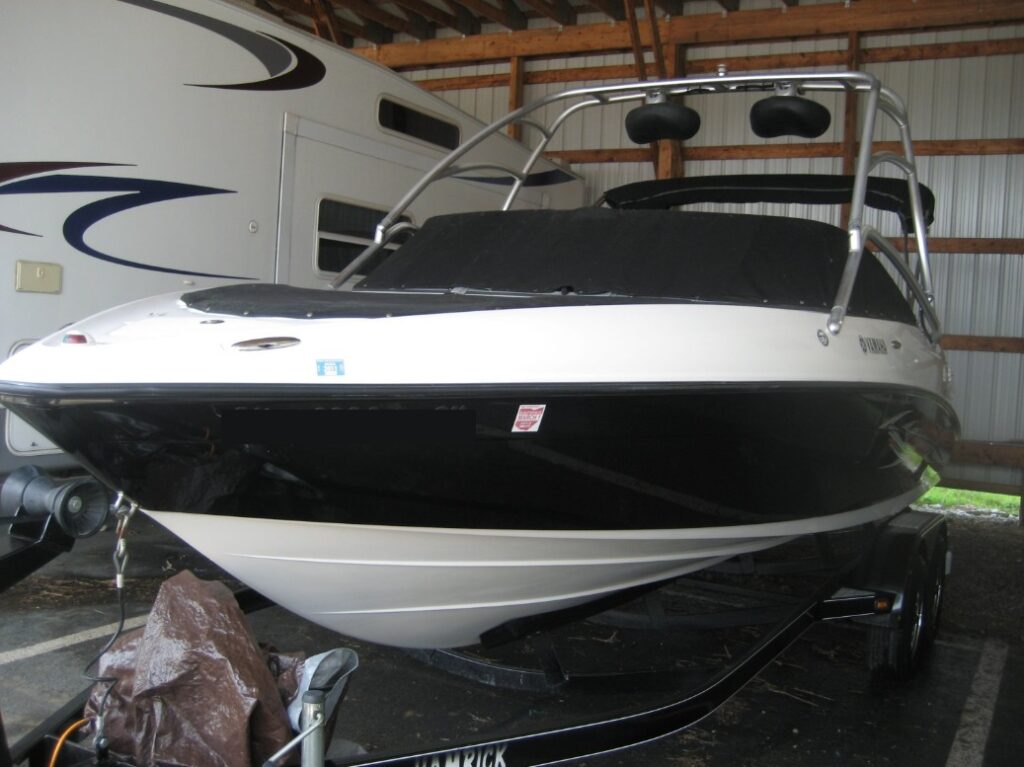
Storage alternatives to wet docking
If you’re not committed to keeping your boat in the water full-time, there are several effective storage methods that can help protect your vessel.
Trailer storage is ideal for smaller boats. It allows you to clean, inspect, and cover the boat after every use—perfect for long-term preservation.
Dry stack storage is another excellent option. Marinas lift your boat into an indoor rack between outings, protecting it from UV rays, rain, and marine growth.
Boat lifts are great for homeowners with a private dock. These systems hold your boat just above the water when not in use. This eliminates hull damage while still keeping your boat accessible.
Adding a canopy or shelter above the lift will reduce sun and rain exposure. If you’re considering this option, check out Is It Worth It to Store a Boat in a Shelter for more insights.
How to park a boat on a dock?
If you plan to leave your boat docked this summer, make sure it’s properly secured. Here’s how:
Approach slowly. Dock your boat at idle speed, fenders out, and steer into the wind or current for control.
Use bow and stern lines to keep the boat close to the dock. Then add spring lines to prevent movement front to back.
Add fenders to protect the hull from rubbing. Line height should match your boat’s rub rail to absorb shocks from waves or wakes.
Allow slack if water levels fluctuate. Tightly secured lines can strain cleats or even damage your boat if water rises or drops.
Secure all canvas and gear. A loose cushion or bimini top can easily fly away or tear in strong wind.
How to prepare your boat for summer?
Proper preparation is key—especially if you plan to leave your boat docked for the summer.
Start with a thorough inspection. Check for any signs of winter damage or wear on the hull, lines, and fittings.
Change your fluids—engine oil, coolant, and gear lubricant. Replace filters and inspect hoses and belts for cracks.
Charge your battery and ensure your bilge pump works properly. Don’t risk leaving your boat unattended without testing key systems.
Inspect your safety gear. Make sure life jackets, fire extinguishers, and emergency tools are in good condition.
And don’t skip cleaning. Book a Boat Detailing in Columbus to deep clean your boat’s interior and exterior. A fresh coat of wax helps fight off oxidation from summer sun exposure.
What happens if I leave my boat docked all summer without maintenance?
Neglecting a docked boat for weeks at a time is a costly mistake.
Water may collect in the bilge, mildew may spread, and algae or barnacles will latch on. If you’re not around to catch these issues, your boat could sink right at the dock.
Even with a working bilge pump, power failures or dead batteries can leave your boat vulnerable.
If you’re not able to inspect the boat weekly, consider dry storage options or a neighbor to check in on it.
Why dry storage is the safest long-term choice
Dry storage options help maximize your boat’s life and minimize maintenance. Whether on a trailer, in a dry stack, or on a boat lift, these methods reduce risk.
Without constant water exposure, your boat avoids blistering, corrosion, and marine life buildup. UV rays also do far less damage under a canopy or in indoor storage.
Most importantly, dry storage gives you peace of mind—especially during bad weather or extended time away.
If you can’t store your boat dry, at least reduce water contact with a boat lift and consistent cleaning.
Final thoughts: Can I leave my boat in the water on a dock for the summer?
Yes—you can. But it requires a plan.
You need to clean regularly, inspect weekly, and stay on top of protective measures like antifouling paint, bilge checks, and boat detailing services.
For boaters in seasonal climates like Ohio, the answer to “Can I leave my boat in the water on a dock for the summer?” depends on your commitment to care.
If convenience is your priority, dock it—with diligence. If long-term protection matters more, opt for dry storage or a lift.
Whichever method you choose, stay proactive. Your boat—and your wallet—will thank you.

About the Author
Kevin Schatz is the president of Speedy K’s Mobile Detailing Systems, a Central Ohio company providing professional on-site detailing for automobiles, boats, RVs, motorcycles, commercial trucks, fleets and aircraft. His experience includes technician training, detailing-product development and the creation of more than a dozen training manuals and educational resources. Kevin shares practical advice drawn from 30+ years in the detailing industry to help vehicle owners properly clean, protect and preserve their investments.