
How do I know if my boat’s gel coat is oxidized?
A boat can look clean and still have an oxidized gel coat. Dirt usually washes away, but oxidation leaves the surface dull, chalky, faded, or uneven even after a thorough cleaning. You may also notice that the hull no longer reflects light clearly or that darker colors have lost their depth.
So, how do I know if my boat’s gel coat is oxidized? Start by looking at the finish in direct daylight, then run a clean hand or dark microfiber towel across it. If the surface leaves behind a powdery residue, feels dry, or refuses to shine after washing, oxidation is a likely cause.

What does oxidized gelcoat look like?
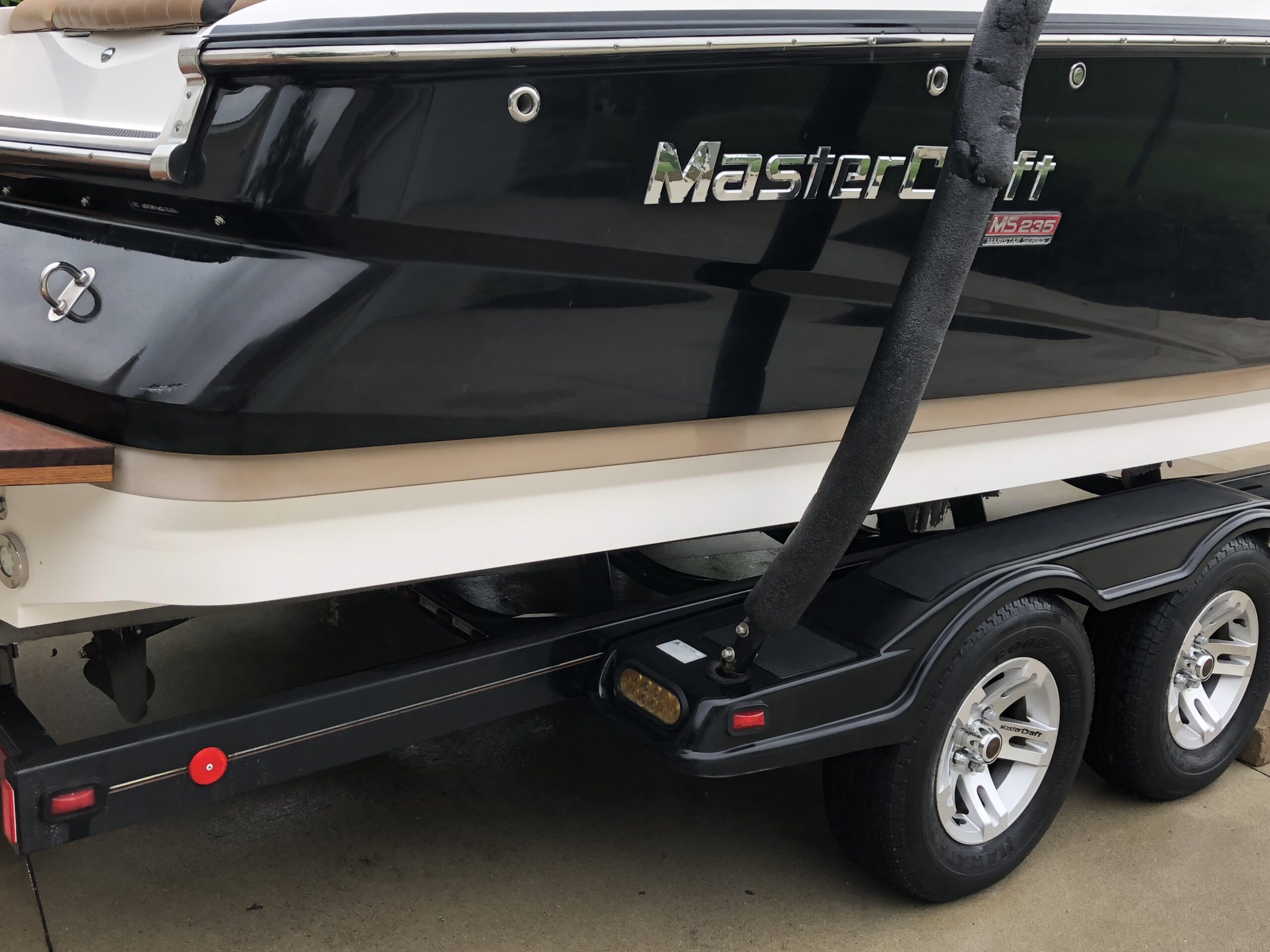
Oxidized gel coat usually looks cloudy rather than glossy. White boats may appear flat, yellowed, or slightly gray, while blue, red, and black sections often become pale or patchy. The finish may look better when wet, only to turn dull again as soon as it dries.
One of the clearest signs is a chalk-like residue. Wipe a small area with a clean, dark towel. If white or colored powder transfers to the towel, the outer layer of gel coat is breaking down and needs more than ordinary washing.
Oxidation can also appear unevenly. Areas that face the sun, sit above the waterline, or remain uncovered during storage often fade first. Decals, fittings, and covered sections may leave behind sharper, darker outlines that show how much the exposed gel coat has changed.
How do I know if my boat’s gel coat is oxidized or simply dirty?
Wash a small test section with a proper marine soap, rinse it well, and let it dry completely. If the original shine returns, you were probably dealing with dirt, minerals, or surface staining. If the area still looks milky or faded, the problem is likely oxidation.
Water spots and organic stains can also make gel coat look neglected, but they usually have defined edges or appear in specific areas. Oxidation is more likely to create a broad, uniform loss of gloss. It can cover an entire side of the hull or gradually worsen from the top down.
I also recommend comparing exposed gel coat with a protected area, such as beneath a snap-on cover, fitting, or registration decal. That contrast can be eye-opening. A noticeably richer color underneath confirms that sunlight and exposure have worn down the surrounding finish.

Try a small polish test
Apply a marine polish to a discreet test spot according to the product directions. If the color and gloss return, the oxidation is probably light enough to correct with polishing or compounding. If the improvement is minimal, the damage may be heavier or the gel coat may already be too thin for aggressive correction.
What causes gelcoat to oxidize?
Ultraviolet exposure is one of the biggest causes. Gel coat protects the fiberglass underneath, but years of sunlight gradually break down its surface. Heat, moisture, road grime, and water contaminants can speed up the process.
Storage habits matter too. A boat left uncovered outdoors will normally oxidize faster than one stored indoors or under a well-fitted cover. Even a covered boat can develop problems when moisture becomes trapped or the finish is not cleaned and protected before storage.
Harsh cleaners are another common issue. Strong chemicals may remove waxes, sealants, and other protection, leaving the gel coat exposed. As Kevin from Speedy K’s often explains, proper maintenance should follow the manufacturer’s recommendations rather than relying on whatever product happens to be sitting on a store shelf.
Can you buff out oxidation?
Yes, many cases of light or moderate oxidation can be buffed out. The process normally begins with washing and decontaminating the surface, followed by a suitable compound or polish. A protective wax or sealant is then applied after the gloss has been restored.
The key is matching the correction method to the condition of the gel coat. Light oxidation may respond to a cleaner wax or mild polish. Moderate oxidation may require machine compounding, while severe cases can call for wet sanding before polishing.
More aggressive is not always better. Gel coat is thicker than automotive clear coat in many applications, but it is not unlimited. Excessive pressure, the wrong pad, poor technique, or repeated heavy cutting can create swirl marks, uneven color, or permanent damage.
A helpful overview is available in the BoatUS guide to restoring gel coat. For anything beyond light oxidation, professional evaluation is the safer choice.
How do you restore faded gelcoat on a boat?
Restoration should begin with an honest inspection. A professional will look at the color loss, surface texture, previous repair work, decals, graphics, edges, and the amount of material available for correction. That inspection determines whether the boat needs polishing, compounding, wet sanding, repair, or a combination of steps.
Kevin’s approach comes from decades of studying how boats and their gel coats are made, speaking with manufacturers, attending technical training, and practicing on salvage-yard boats. That matters because restoration is not simply applying a product and running a buffer over the hull. The system, tools, pad choice, product choice, and technique all affect the final result.
For a closer look at the overall process, read How to Restore Faded Gelcoat on a Boat. It explains why faded gel coat needs correction and protection rather than a temporary shine that disappears after the next wash.
When oxidation becomes a gel coat repair issue
Oxidation affects the outer surface, but not every faded or damaged area can be solved through polishing. Deep cracks, chips, gouges, exposed fiberglass, blistering, or sections where the gel coat has worn away require actual repair. Buffing may improve the surrounding shine, but it cannot replace missing material.
Color inconsistency can also remain after correction. Older boats may have gel coat that has faded deeply or been repaired with a poor color match. In those cases, Boat Gel Coat Repair may involve filling, leveling, color matching, and refinishing rather than polishing alone.
This is where expectations need to be realistic. Kevin often compares severely damaged finishes to a failed computer hard drive: once essential material is gone, there are limits to what surface correction can recover. A skilled professional should explain those limits before work begins.

Signs you may need professional boat gel coat restoration
A small, lightly oxidized area may be manageable for an experienced boat owner. Large hulls, dark colors, heavy chalking, previous sanding marks, damaged graphics, and severely faded surfaces are different. These conditions require more control and often multiple correction stages.
Professional Boat Gel Coat Restoration may be the better option when the boat still looks dull after hand polishing, oxidation quickly returns, or the surface has several different levels of damage. A trained detailer can test a section and choose the least aggressive effective method.
Searching for Boat Gel Coat Restoration Near Me should involve more than comparing prices. Ask about experience with marine gel coat, insurance, correction methods, test spots, and how the finish will be protected afterward. Be cautious with companies that collect payment through a subcontracting hub but do not clearly identify who will perform the work.
How to keep oxidation from coming back
Restoration is only the first half of the job. Once the gloss returns, the surface needs ongoing protection and sensible care. No coating eliminates maintenance forever, regardless of what an advertisement promises.
Wash the boat with manufacturer-appropriate products, avoid unnecessarily harsh chemicals, and remove contaminants before they sit for months. Keep the boat covered or stored indoors when practical. A clean, well-fitted cover can slow fading.
Protection should be renewed on a schedule that matches the boat’s use, storage, and exposure. Boats that remain outdoors or spend long periods in direct sun may need attention several times during the season. Kevin’s advice is simple: treat the finish like any other investment that needs routine upkeep, not a one-time fix.
Do not wait until the gel coat looks severely damaged
Early oxidation is easier and safer to correct than years of neglected chalking. If your boat looks glossy while wet but turns faded when dry, leaves powder on a towel, or no longer reflects light evenly, schedule an inspection before the condition worsens.
The answer to “How do I know if my boat’s gel coat is oxidized?” often comes down to three signs: fading, chalky residue, and a lasting loss of gloss after washing. Catch those signs early, use the right correction process, and protect the finish afterward. Your boat will look better, be easier to maintain, and hold onto its appearance much longer.
About the Author
Kevin Schatz is the president of Speedy K’s Mobile Detailing Systems, a Central Ohio company providing professional on-site detailing for automobiles, boats, RVs, motorcycles, commercial trucks, fleets and aircraft. His experience includes technician training, detailing-product development and the creation of more than a dozen training manuals and educational resources. Kevin shares practical advice drawn from 30+ years in the detailing industry to help vehicle owners properly clean, protect and preserve their investments.